
10 Common Maths Problems Parents Face
Every parent wants to see their child do well in school. But sometimes, despite regular homework and practice, children struggle with things that seem simple to adults. They take too long to solve multiplication questions, lose focus while studying, forget calculation methods or make mistakes in exams even when they know the answer.
If you have ever wondered, “My child understands maths, so why can't they solve it faster?” you are certainly not alone. 10 Common Maths Problems Parents Face
The truth is that being good at maths is not just about knowing formulas or memorising tables. Children also need number sense, regular practice, problem-solving skills and the confidence to apply what they have learned.
The good news These skills can be developed gradually with the right approach.
For parents exploring Abacus, Vedic Maths or mental maths classes near Sector 70, Gurgaon, understanding how children learn is the first step towards making the right decision.
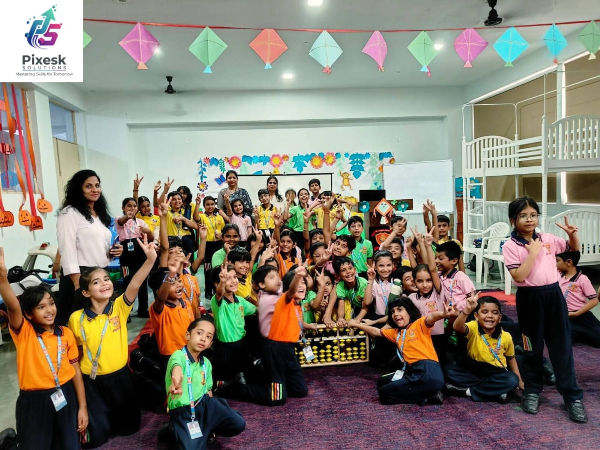
Why does my child take so long to solve maths questions?
This is one of the most common concerns parents have, especially when examination time approaches.
A child may understand addition, subtraction or multiplication but still take longer to calculate the answer. Sometimes, the basics are not yet automatic. In other cases, the child may be unsure which method to use or may become anxious when asked to solve questions quickly.
For example, when calculating 8 × 7, one child may immediately recall 56, while another may count repeatedly to find the answer. Both children may understand multiplication, but their calculation fluency is different.
What helps?
Regular practice with number patterns, multiplication facts and mental calculation strategies.
Instead of asking your child to solve 50 questions every evening, start with a smaller set of questions and focus on understanding the method. Once accuracy improves, encourage your child to solve similar questions more efficiently.
The objective is not simply to make children faster. It is to help them become comfortable with numbers.
How can I improve my child's maths speed without putting pressure on them?
Many parents search for maths tricks that will help their children calculate faster. Shortcuts can certainly help, but they work best when children understand the underlying concepts.
Consider this example:
How do you multiply 48 by 5 mentally?
Instead of multiplying directly, divide 48 by 2 and multiply the result by 10.
48 ÷ 2 = 24
24 × 10 = 240
The answer is 240.
This method gives children another way to approach the calculation. As they learn more number relationships, they begin to recognise that some problems can be solved in several ways.
Parents can encourage this skill by introducing one calculation technique at a time, practising it with everyday examples and allowing children to explain how they reached an answer.
At Pixesk Solutions, Sector 70, Gurugram, children can explore structured Abacus and Vedic Maths learning to practise arithmetic and calculation techniques. The right programme depends on the child's age, current skills and learning goals.
Most importantly, avoid comparing your child's speed with that of classmates or siblings. Children build fluency at different rates.
Why does my child lose focus while studying maths?
Have you noticed your child sitting at the study table for an hour but completing very little work?
It is tempting to assume that the child is not interested in studying. However, concentration can be affected by several things, including tiredness, distractions, a task that feels too difficult or a study session that is too long.
A simple change in routine can sometimes make a difference.
Instead of saying, “Finish the entire maths worksheet,” give your child a smaller goal: complete five questions, check the answers and then take a short break.
You can also make maths more interactive by using number puzzles, mental calculation games and practical examples from everyday life.
For younger children, short and engaging activities are often a better starting point than long periods of repetitive work.
At a learning centre, the teacher's role is equally important. Clear explanations, appropriate practice and opportunities to ask questions can help children participate more actively in lessons.
This is one reason parents should look beyond course names when choosing a maths learning programme. The way a child is taught matters just as much as what they are taught.
Can Abacus classes really help children become faster at maths?
Abacus learning introduces children to a physical tool for representing numbers and performing calculations. Through guided practice, learners become familiar with number patterns and calculation procedures. As they progress, they may learn to visualise the abacus and perform calculations mentally.
For children who enjoy visual and hands-on learning, this approach can make arithmetic practice more engaging.
However, parents should have realistic expectations. Abacus classes are not a magic solution that automatically improves every academic skill or guarantees exceptional intelligence.
Their value depends on the quality of instruction, regular practice, the child's readiness and how progress is assessed.
If you are considering Abacus classes near Sector 70 or Sector 70A, Gurgaon, ask how the programme develops skills over time, how teachers support children who learn at different speeds and how progress is communicated to parents.
At Pixesk Solutions, parents can explore the available Abacus programme and discuss whether it matches their child's learning needs.
What is Vedic Maths, and how can it make calculations easier?
Vedic Maths is a collection of mathematical techniques commonly taught to simplify selected calculations. These methods can help students approach certain multiplication, division and other arithmetic problems more efficiently.
For example, multiplying a number by 9 can often be done by multiplying it by 10 and subtracting the original number.
36 × 9 = 36 × 10 − 36
= 360 − 36
= 324
Once children understand why this works, they can use the method when appropriate rather than memorising it as an isolated trick.
This is the real advantage of learning calculation strategies: children start looking for patterns and relationships between numbers.
Vedic Maths is not a replacement for understanding school mathematics. Children still need to learn concepts, work through unfamiliar problems and know when a particular shortcut is useful.
For students who already understand basic arithmetic and want to develop more efficient calculation methods, a structured Vedic Maths programme may be worth exploring.
Abacus or Vedic Maths: Which one should parents choose?
This depends on what your child needs most.
Abacus learning focuses on using an abacus to represent numbers and practise arithmetic, with mental visualisation introduced as learners progress.
Vedic Maths focuses on calculation methods and shortcuts that can simplify selected operations.
If your child needs more structured arithmetic practice, Abacus may be worth considering. If your child understands basic calculations but wants to explore alternative ways of solving them, Vedic Maths may be a suitable option.
Some children may also benefit from regular school mathematics coaching to strengthen concepts and solve curriculum-based problems.
There is no single programme that is best for every child. Before enrolling, consider the child's age, existing skills, interests and areas of difficulty.
At Pixesk Solutions, parents can enquire about Abacus, Vedic Maths and mathematics coaching to understand which learning option is appropriate.
Do mental maths activities help develop a child's brain?
Mental maths encourages children to work with numbers without relying entirely on written calculations. It involves recalling number facts, recognising patterns and choosing ways to solve a problem.
For example, a child calculating 25 × 16 might think:
25 × 4 = 100
Since 16 = 4 × 4,
25 × 16 = 100 × 4 = 400.
This kind of number reasoning gives children an opportunity to practise flexible thinking and understand how calculations can be broken into manageable steps.
With regular practice, children may become more confident with familiar calculations and more comfortable exploring different approaches to a problem.
However, it is important to be realistic about claims involving brain development. Mental maths is a way to practise mathematical skills; it does not guarantee a higher IQ, extraordinary memory or better performance in every subject.
The most useful outcome is a child who understands numbers more clearly and feels confident using them.
My child makes silly mistakes even when they know the answer. What should I do?
This is a familiar situation for many parents. A child studies a topic, understands the method and then loses marks because of small mistakes in a test.
The solution is to identify the pattern rather than simply telling the child to be more careful.
If they regularly forget multiplication facts, practise those facts separately. If they misread questions, teach them to underline important information. If they skip calculation steps, encourage them to write down the working until the method becomes more familiar.
Children also need to learn how to check whether an answer makes sense.
For example,
if a child calculates 48 × 5 and gets 2,400, encourage them to estimate first. Since 50 × 5 is 250, the answer should be close to 250, not 2,400.
This simple habit of estimation can help children identify errors independently.
At Pixesk Solutions, parents can discuss whether their child would benefit from additional arithmetic practice, mental maths techniques or support with school mathematics.
How much maths practice does a child need every day?
There is no fixed duration that suits every child. Age, school level, attention span and existing skills all make a difference.
For many children, a short and consistent routine is a useful starting point.
Try a 15-minute session:
Spend three minutes revising familiar number facts.
Use five minutes to practise one calculation skill.
Spend five minutes solving a few mental maths questions.
Use the final two minutes to review mistakes and recognise progress.
Adjust the routine according to your child's age and needs. The goal is to make practice manageable enough to repeat regularly.
It is also important to leave room for play, rest and other activities. More practice is not always better if the child becomes frustrated or exhausted.
What should parents look for when choosing maths classes near Sector 70, Gurgaon?
If you live in Sector 70, Sector 69, Sector 70A, Sector 71, Sector 72, Sector 75 or nearby parts of Gurugram, you may be comparing different learning centres for your child.
Before making a decision, look beyond advertisements promising fast results.
Consider whether the centre:
Explains concepts clearly rather than relying only on memorisation.
Offers a programme suited to the child's age and current level.
Provides opportunities for questions and individual guidance.
Tracks accuracy and progress, not just calculation speed.
Communicates with parents about the child's learning needs.
Sets realistic expectations about the results of regular practice.
Educator experience also matters. A teacher needs to recognise when a child has misunderstood a concept, when more practice is required and when a different explanation might help.
Pixesk Solutions, located at Tapasya Mall in Sector 70, Gurugram, offers Abacus, Vedic Maths and mathematics coaching programmes. Its published educator profile identifies Er. Vidusha Gupta as director and co-founder, with an engineering background and 15 years of experience in education.
For parents considering the centre, a conversation with the teaching team and a demo session can help establish whether its teaching approach is a good fit.
No responsible educator can guarantee that every child will achieve the same results. What matters is whether the programme addresses your child's actual needs and supports steady improvement.
Why consider Pixesk Solutions for your child's maths learning?
Choosing an additional learning programme is a personal decision. Parents want a place where their child feels comfortable asking questions, receives appropriate guidance and has a clear learning path.
Pixesk Solutions brings together different maths learning options, including Abacus, Vedic Maths and school mathematics coaching. This allows parents to discuss whether their child needs arithmetic practice, calculation techniques or additional support with school topics.
The centre's Sector 70 location may also be convenient for families living in nearby residential communities.
Rather than choosing a course simply because it promises faster calculations, parents can speak with the educators, understand the programme structure and ask how learning progress is evaluated.
That conversation is a useful first step towards finding an approach that suits the child.
Final thoughts: The goal is not just faster maths, but greater confidence
When a child struggles with calculation speed, concentration or accuracy, it is natural for parents to look for a quick solution.
But lasting progress usually comes from understanding the problem, choosing the right learning approach and practising consistently.
A child who takes longer to solve a calculation today may become more confident with the right support. Another child may need stronger foundations before attempting shortcuts. Both deserve an approach that meets them where they are.
For parents looking for Abacus, Vedic Maths or maths coaching near Sector 70, Gurgaon, Pixesk Solutions offers programmes worth exploring according to the child's learning goals.
Start with a simple question: what does my child need help with most?
Once you understand the answer, you can make a more informed decision about the next step.
To enquire about Abacus, Vedic Maths or mathematics coaching, contact Pixesk Solutions at Tapasya Mall, Sector 70, Gurugram, or visit www.pixesksolutions.com.
Frequently asked questions
1. Why does my child understand maths at home but forget everything during exams?
This can happen when a child has not practised applying concepts independently, feels anxious during tests, or finds unfamiliar questions difficult. Encourage regular revision, independent problem-solving and practice with different question types. If the child struggles with school concepts, mathematics coaching may help strengthen understanding. The aim is to help children apply what they know confidently, not simply memorise answers.
2. Can Vedic Maths short tricks help children calculate faster?
Yes, Vedic Maths techniques can simplify selected calculations when children understand how and when to apply them. For example, multiplying 36 by 9 can be done by calculating 36 × 10 and subtracting 36, giving 324. These strategies can make some calculations more efficient, but they do not replace strong mathematical foundations. Vedic Maths classes at Pixesk Solutions can be explored by parents looking for structured practice with calculation techniques.
3. At what age should a child start Abacus or Vedic Maths classes?
The appropriate starting age depends on the programme and the child's readiness. Younger learners may benefit from number recognition and basic arithmetic activities, while older students may be ready for more advanced calculation techniques. Before enrolling, ask about the course level, teaching approach and practice requirements. Pixesk Solutions can help parents understand which of its available maths programmes may suit their child's learning goals.
4. Which maths classes should I choose for my child near Sector 70, Gurgaon?
Start by identifying your child's main difficulty. If they need structured arithmetic practice, consider exploring Abacus. If they understand basic calculations and want to learn shortcuts, Vedic Maths may be suitable. If they struggle with school concepts, mathematics coaching may be more appropriate. Pixesk Solutions, located at Tapasya Mall, Sector 70, Gurugram, offers these learning options. Parents can contact the centre to discuss their child's needs and enquire about available classes.
5. Can mental maths improve a child's memory and brain power?
Mental maths encourages children to recall number facts, recognise patterns and work through calculations without relying entirely on written methods. Regular practice may help them become more comfortable with numbers and develop flexible calculation strategies. However, mental maths does not guarantee a higher IQ or exceptional memory. Its most practical benefit is helping children practise mathematical reasoning and calculation skills.
6. What should I do if my child avoids maths homework every day?
Try to understand why your child avoids maths before increasing the workload. They may find the questions difficult, fear making mistakes or feel overwhelmed by a long worksheet. Break the work into smaller tasks, offer encouragement and celebrate progress. If foundational concepts are causing frustration, additional guidance from a maths educator may help your child approach the subject with greater confidence.
7. How much maths practice should my child do every day?
The ideal amount depends on the child's age, school level and learning needs. A short, focused session can be a useful starting point for younger learners, while older students may need more time for complex topics. Prioritise consistent practice, understanding and accuracy rather than completing a large number of questions. Adjust the routine if your child becomes tired or frustrated.
8. Are there Abacus and Vedic Maths classes near Sector 70A, Gurgaon?
Parents living in Sector 70A and nearby parts of Gurugram can explore maths-learning options at Pixesk Solutions, located at Tapasya Mall, Sector 70. The centre offers Abacus and Vedic Maths programmes, along with mathematics coaching. Contact the centre directly to confirm current batches, timings, suitability and availability.
9. How can I know if my child is improving in maths?
Look for fewer repeated mistakes, better understanding of number relationships, greater confidence when solving questions independently and improved accuracy on similar problems. You can also track how long your child takes to complete a consistent set of questions, provided the difficulty remains comparable. Progress should be measured against the child's earlier performance, not only against other students.
Looking for the right maths-learning approach for your child?
Visit Pixesk Solutions to explore its Abacus, Vedic Maths and mathematics coaching programmes in Sector 70, Gurugram.

Comments